As a medical device approaches regulatory submission or commercialization, the focus shifts from design iteration to verification and validation (V&V).
This phase provides objective evidence that the device meets design requirements, performs as intended, and is safe for clinical use.
For minimally invasive devices such as catheters, delivery systems, and implants, a complete V&V program typically includes:
- Fatigue testing
- Tensile and mechanical testing
- Dimensional verification
- Packaging validation
- Sterilization validation
Each element plays a critical role in demonstrating device safety, reliability, and regulatory readiness. At Medical Murray, our testing labs support these activities every day, helping device companies generate the data required for regulatory submissions and product launch
Fatigue Testing: Simulating Real-World Use
Many interventional devices experience repeated mechanical stress once they are in the body. Cardiovascular implants may see millions of cycles of pulsatile pressure, while catheter shafts experience constant bending and torque during navigation.
Fatigue testing simulates these conditions to evaluate long-term performance.
Testing is commonly conducted in alignment with standards such as ISO 10555, which defines performance requirements for intravascular catheters.
Fatigue testing helps identify:
- Material fatigue
- Structural deformation
- Microfractures
- Performance degradation over time
Identifying these risks early helps prevent late-stage failures, redesigns, and regulatory delays.
Tensile Testing: Verifying Mechanical Integrity
Tensile testing evaluates how much force a device or component can withstand before failure.
For catheter-based and implantable devices, this includes:
- Bond strength between components
- Shaft tensile strength
- Adhesive joints and welds
- Textile and suture performance
Testing methods often include tensile, peel, shear, tear, and puncture testing, all of which generate traceable data required for regulatory submissions.
Medical Murray’s ISO/IEC 17025:2017 accredited laboratories support a wide range of mechanical testing methods, including tensile, peel, shear, tear, and puncture testing for device components and materials.
Dimensional Verification: Ensuring Precision and Consistency
Medical devices often operate in extremely tight anatomical spaces. Even small dimensional variations can affect performance.
Dimensional verification ensures that devices meet the specifications defined during design development. Typical measurements include:
- Shaft diameters and wall thickness
- Implant geometry
- Component tolerances and alignment
Dimensional inspections also help confirm that manufacturing processes consistently produce devices within specification.
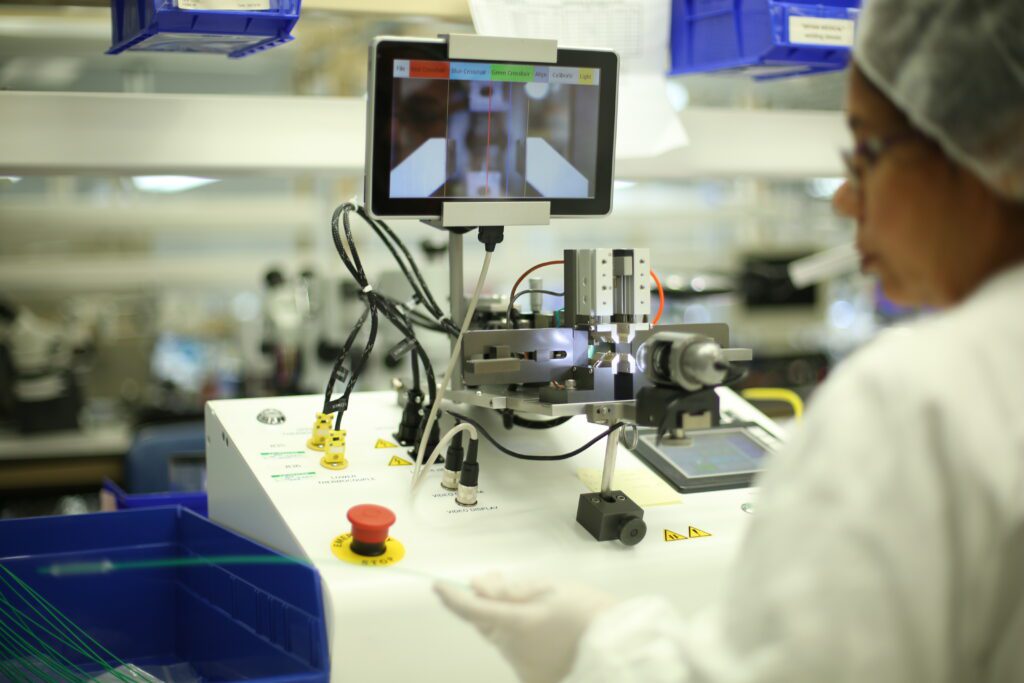
In many cases, these measurements support lot release testing, ensuring that finished devices meet the required dimensional and mechanical criteria before being released for clinical use or commercial distribution.
Packaging Validation: Maintaining Sterility and Integrity
Even if a device performs perfectly, it still must arrive sterile and undamaged when the clinician opens it.
Packaging validation demonstrates that the packaging system protects the device through sterilization, transportation, storage, and shelf life.
These studies typically follow standards such as:
- ISO 11607 – Packaging for terminally sterilized medical devices
- ASTM F88/F88M – Seal strength testing
- ASTM F2096 – Package leak and integrity testing
Packaging validation programs often include seal strength testing, distribution simulation, and both accelerated and real-time aging studies to confirm that the sterile barrier system performs as intended.

For many device programs, packaging validation becomes a key part of the documentation required for regulatory submissions.
Sterilization Validation: Preparing for Market Readiness
Sterilization validation confirms that a device can be reliably sterilized without compromising performance.
Common methods include:
- Ethylene oxide (EO)
- Gamma irradiation
- Electron beam (e-beam)
A strong validation program includes:
- Protocol development
- Bioburden and sterility testing
- Process validation and documentation
One advantage for many device programs is that Medical Murray owns a validated EO sterilization cycle. In many cases, new devices can be adopted into this existing validated cycle. Leveraging an existing validated sterilization cycle, when available, can significantly reduce timeline and cost.
Testing to Recognized Standards
One of the most important aspects of a successful V&V program is ensuring that testing is conducted according to recognized industry standards.
Medical Murray’s testing programs frequently support standards such as:
- ISO 10555 – Intravascular catheter performance testing
- ISO 80369 and ISO 594 – Luer connection testing
- ISO 7886 – Syringe testing
- ISO 11607 – Sterile packaging validation
- ASTM F88/F88M – Package seal strength testing
- ASTM F2096 – Package integrity testing
- ASTM F640 – Radiopacity testing for interventional devices
Conducting testing according to these standards helps ensure that the resulting data will support regulatory submissions and global commercialization.
Bringing Your V&V Program Across the Finish Line
The final stages of device development require clear, defensible evidence that a product is safe, effective, and manufacturable.
A well-executed V&V program delivers:
- Regulatory confidence
- Reduced risk of delays
- Faster time to commercialization
Ultimately, it provides what every team needs before submission:
Confidence that the device will perform exactly as intended.
Work with an ISO 17025 Accredited Testing Partner
Medical Murray’s testing laboratories support:
- Mechanical and fatigue testing
- Packaging validation
- Sterilization validation
We work with teams developing catheters, implants, and minimally invasive devices to generate submission-ready data. Contact our team to discuss your testing program.