
Every medical device company wants to reach the market faster.
The instinct is often to begin designing the “real” product immediately, complete the detailed CAD, refine every feature, select final materials, and perfect the design before building the first prototype.
It sounds like the fastest path to a finished product.
Ironically, it’s often the slowest.
The teams that reach commercialization the fastest usually spend the least amount of time trying to build the final product. Instead, they focus on learning.
Every prototype is designed to answer a question.
Every test reduces uncertainty.
Every iteration increases confidence.
Building less of the final product early can ultimately help teams reach the final product faster.
That’s the real value of rapid prototyping.
Every Prototype Should Answer a Specific Question
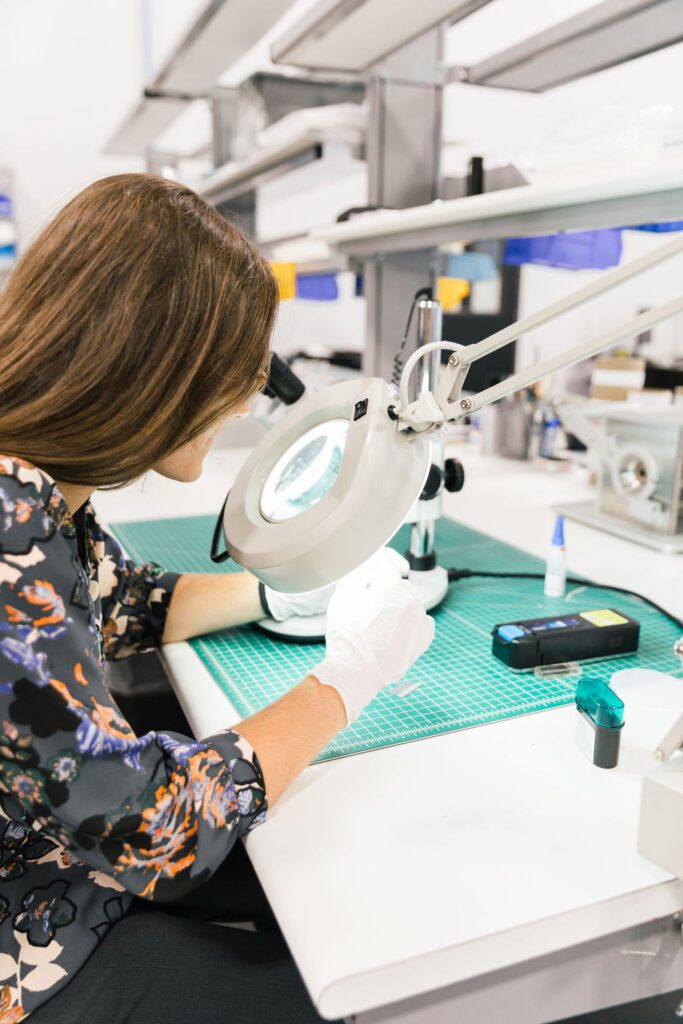
One of the most common misconceptions about medical device prototyping is that a prototype should be an early version of the finished product.
Experienced development teams approach prototypes differently.
A prototype is not necessarily a product.
It is an experiment.
Its purpose is not always to look polished or represent the final manufacturing process. Its purpose is to help the engineering team learn something it did not know before the prototype was built.
Before building anything, ask:
What is the biggest unknown preventing this project from moving forward?
That uncertainty might be:
- Can the catheter navigate the target anatomy?
- Does the implant deploy consistently?
- Is the shaft stiff enough to provide support?
- Is the distal section flexible enough?
- Will physicians understand how to operate the handle?
- Can the mechanism withstand repeated use?
- Can the design be assembled and manufactured consistently?
Once the biggest unknown has been identified, the team can build the simplest prototype capable of producing a meaningful answer.
Not the complete device.
Not every feature.
Just enough of the design to answer the current question.
For example, a catheter development team evaluating shaft performance may not need a finished handle, packaging configuration, or fully refined distal assembly. It may only need several representative shaft constructions that can be compared through benchtop testing.
The goal is not to build as much hardware as possible.
The goal is to eliminate uncertainty.
The Fastest Way to the Finish Line Isn’t a Straight Line
Medical device projects can spend months refining CAD models, reviewing secondary features, and debating design decisions before a functional prototype is evaluated.
Then the first benchtop test reveals a fundamental issue.
The catheter does not track through the anatomy.
The deployment force is too high.
The implant rotates unexpectedly.
The handle is not intuitive.
The device cannot be assembled consistently.
At that point, the project does not need a minor adjustment. It needs a redesign.
Engineering work completed under the original assumptions may need to be revisited because the most important technical risks were not evaluated early enough.
Fast-moving development teams avoid this problem by prototyping sooner. They allow physical testing, physician feedback, and objective data to guide design decisions before too much time and cost have been committed.
These teams may build more prototypes throughout development, but each prototype helps prevent a larger and more expensive redesign later.
That is the paradox of rapid prototyping.
Building more focused prototypes can help teams reach the final design faster.
Choose the Prototype Method Based on the Question
The best medical device prototyping method depends on what the development team is trying to learn. And different questions require different prototype methods.
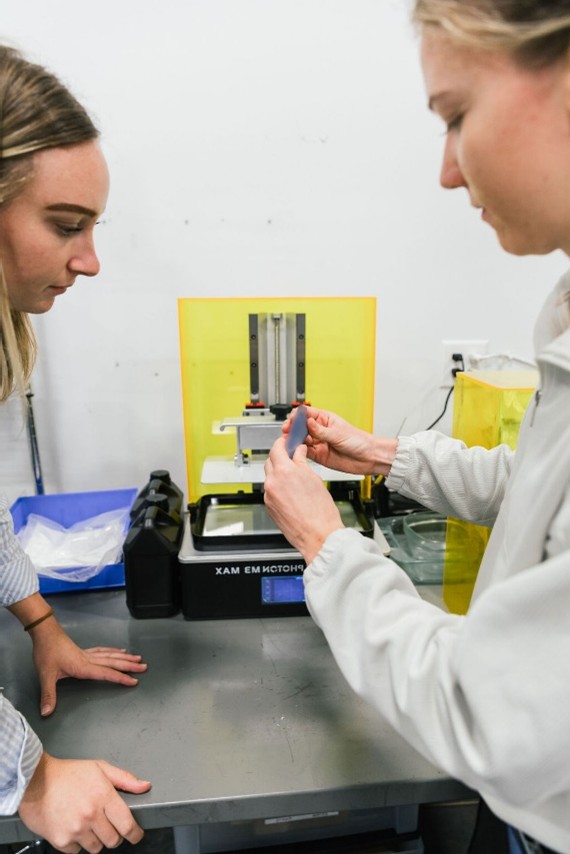
3D-Printed Prototypes
Additive manufacturing is often useful for:
- Early concept evaluation
- Physician feedback
- Ergonomic studies
- Assembly visualization
- Anatomical fit studies
- Initial handle and enclosure concepts
Because 3D-printed parts can often be produced quickly, they allow teams to evaluate form, fit, and usability before investing in more expensive fabrication methods.
However, printed components may not accurately represent the mechanical properties, surface finish, or dimensional performance of a production component. Those limitations should be considered when interpreting results.
Machined Components
Machined prototypes may be more appropriate when dimensional accuracy or mechanical behavior is important.
They can help teams evaluate:
- Precision mechanisms
- Metal components
- Structural performance
- Tight tolerances
- Component interfaces
- Deployment mechanisms
Machining may take longer than basic additive manufacturing, but it can provide more representative results when material properties and dimensional control directly affect performance.
Hand-Built Catheter Prototypes
Many catheter development programs begin with manually fabricated prototypes.
Hand-built catheter prototypes allow engineers to compare different constructions without waiting for production tooling or a finalized manufacturing process.
A prototype study may compare:
- Polymer combinations
- Braid patterns
- Braid densities
- Coil configurations
- Reinforcement locations
- Shaft transitions
- Distal-tip constructions
The same principle applies beyond the catheter shaft. Early handle prototypes can help teams evaluate ergonomics, actuation, component layout, and usability before committing to a final design.
These builds can help answer questions such as:
- Which construction provides the best trackability?
- Does a coil improve distal flexibility?
- How does braid density affect torque response?
- Where does the catheter begin to kink?
- Does additional reinforcement improve pushability?
- Is the handle comfortable and intuitive to operate?
- Does the handle provide enough room for the required internal components?
Answering these questions early can prevent teams from investing in the wrong catheter construction.
Soft Tooling
As the design becomes more defined, soft tooling can help bridge the gap between early engineering prototypes and production.
Soft tooling may be used to evaluate:
- Molded components
- Assembly methods
- Part repeatability
- Material behavior
- Manufacturing processes
- Early pilot builds
Each prototyping method serves a different purpose.
The right choice should be based on the information the team needs—not simply the current phase of development.
Catheter Development is a Great Example
Imagine a team developing a new delivery catheter.
Rather than designing the entire device before evaluating shaft performance, the team could fabricate several catheter constructions using different:
- Polymers
- Braid densities
- Wire sizes
- Coil designs
- Reinforcement strategies
- Stiffness transitions
The prototypes could then be evaluated for:
- Pushability
- Trackability
- Torque transmission
- Flexibility
- Kink resistance
- Tensile strength
Within a relatively short period, the team may identify a construction that consistently performs better than the others.
Only then does it invest additional engineering effort in optimizing the handle, distal assembly, deployment mechanism, and remaining system components.
Instead of refining the wrong catheter construction, the team can focus its resources on the most promising design.
This approach does not eliminate iteration.
It makes each iteration more purposeful.
Bring Physicians, Testing, and Manufacturing In Early
Rapid prototyping becomes more valuable when it includes input from physicians, bench testing, and manufacturing engineers.
Physician Feedback
Some of the most valuable prototype feedback comes from physicians.
Surprisingly, those conversations don’t require finished-looking devices.
Physicians may provide important input on:
- Procedural workflow
- Device ergonomics
- Handle operation
- Deployment sequence
- Device feel
- Clinical usability
- Procedural efficiency
A simple functional prototype can reveal usability issues that may not be apparent in CAD models or internal design reviews.
Waiting until design verification or late-stage development to collect physician feedback can make changes more expensive and disruptive.
Early feedback gives the team more freedom to improve the design before it becomes constrained by tooling, documentation, validation activities, and established manufacturing processes.

Bench Testing
Prototypes become exponentially more valuable when paired with thoughtful testing.
Instead of asking what engineers think, teams measure what the device actually does.
Depending on the device and development stage, bench testing may evaluate:
- Tensile strength
- Torque transmission
- Flexibility
- Kink resistance
- Deployment force
- Fatigue resistance
- Dimensional consistency
- Functional performance
Early feasibility tests do not always need to be finalized design verification methods. However, they should be controlled enough to produce useful comparisons and support the next engineering decision.
Consistent test conditions are especially important when comparing multiple prototype configurations. The objective is not simply to determine whether one prototype works. It is to understand why one design performs differently from another.
Design for Manufacturability
Manufacturing does not begin at design transfer.
Many of the decisions that determine whether a medical device can be manufactured successfully are made during early development.
These decisions include:
- Material selection
- Component count
- Assembly sequence
- Bonding methods
- Tolerance selection
- Inspection requirements
- Supplier capabilities
When manufacturing engineers participate in early prototyping, they can identify opportunities to:
- Simplify assembly
- Reduce unnecessary components
- Improve tolerance strategies
- Increase process robustness
- Improve inspectability
- Prepare the design for future scale-up
Design for manufacturability should not be treated as a final review performed after the design has already been established.
It should be incorporated into each prototype iteration.
Rapid Prototyping Is Really Rapid Learning
Rapid prototyping is not valuable simply because parts can be produced quickly.
It is valuable because it allows development teams to produce answers quickly.
Every unanswered technical question represents risk.
Each focused prototype removes some of that risk.
As uncertainty decreases:
- Engineering decisions become easier
- Design direction becomes clearer
- Resources can be allocated more confidently
- Downstream redesign becomes less likely
- Manufacturing planning becomes more accurate
The medical device teams that reach commercialization fastest are not necessarily those with the largest budgets or the most engineers.
They are the teams that learn the fastest.
From Proof of Concept to Production
At Medical Murray, we have found that strong medical device development programs follow a straightforward principle:
Build only what is needed to answer the most important question today.
This approach can help companies developing catheters, delivery systems, implants, and other minimally invasive medical devices reduce technical risk while avoiding unnecessary development work.
Depending on the needs of the program, that may involve:
- Proof-of-concept medical device prototypes
- Catheter prototype development
- Physician evaluation units
- Feasibility bench testing
- Design for manufacturability
- Process development
- Pilot production
- Manufacturing scale-up
Each prototype should move the device one step closer to commercialization.
The goal is not simply to build prototypes.
The goal is to build confidence in the design, the performance, and the manufacturing process.
That confidence is what ultimately helps great medical devices reach patients faster.
Frequently Asked Questions About Medical Device Rapid Prototyping
What is the purpose of a medical device prototype?
A medical device prototype is built to evaluate a design assumption, investigate a technical risk, obtain user feedback, or measure device performance. Early prototypes do not necessarily need to represent the final commercial product.
How does rapid prototyping reduce medical device development time?
Rapid prototyping allows teams to test important assumptions earlier. Identifying performance, usability, or manufacturing issues during feasibility development is typically less disruptive than discovering them after the design, tooling, and production processes have been established.
When should design for manufacturability begin?
Design for manufacturability should begin during early concept and prototype development. Early manufacturing input can help improve component selection, tolerances, assembly methods, inspection strategies, repeatability, and scalability.
Ready to Take the Next Step?
The right prototype starts with the right question.
Whether you are working through an early catheter concept, evaluating a delivery system, or preparing a design for manufacturing, Medical Murray can help you identify the next step and build a prototype designed to provide meaningful answers.
Whether you are evaluating a catheter shaft, handle concept, delivery system, or implant, Medical Murray can help you build the right prototype for the question you are trying to answer. Contact our team to start the conversation!